
Last updated: [PUBLISH DATE]
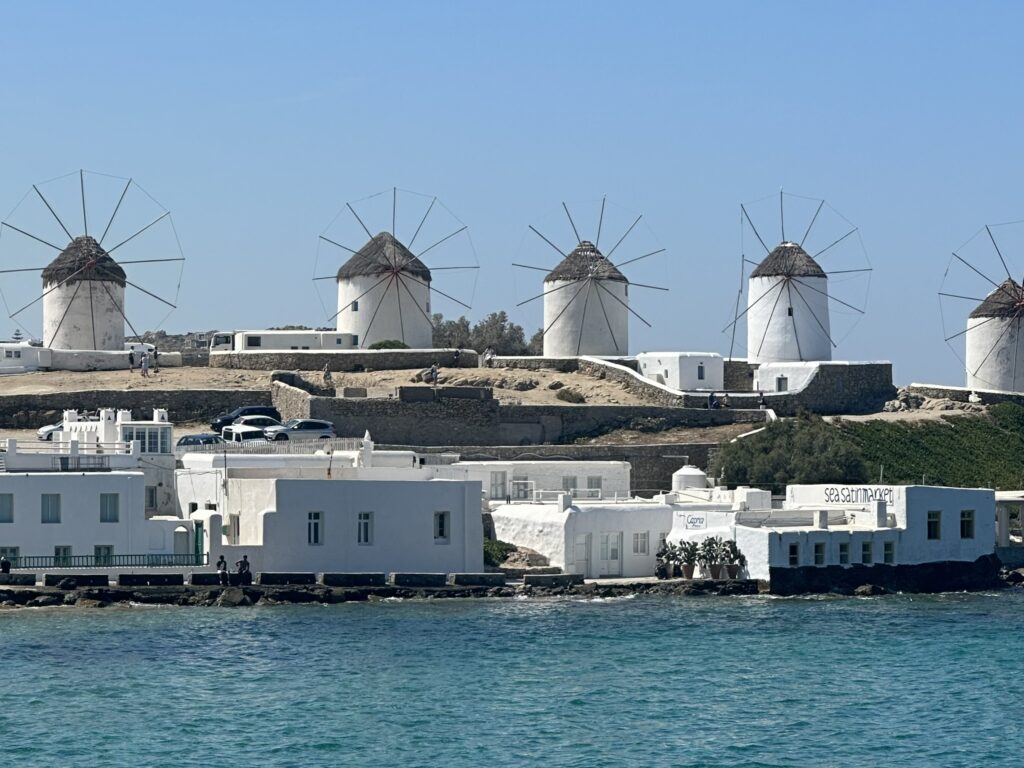
If you’ve ever watched a Little Venice sunset reel and thought, “One day,” read this before you go. Mykonos lives up to its postcard image: whitewashed cubist homes rising above the Aegean, waterfront bars where waves lap at the table legs, and windmills standing like white sentries on the hill. It is Greece’s most photographed island for a reason.
But Mykonos also has two ports that are not interchangeable, a working taxi count somewhere between thirty and thirty-five for the entire island, a cruise tax that adds €20 per person to your day if you arrive by ship between June and September, and at least one notorious beach restaurant with hundreds of documented overcharging complaints. So before you geaux to Greece, here are my Mykonos travel tips.
Orientation to Mykonos
If you are just starting to plan your trip, you might not be clear on the geography. Mykonos is a Cycladic island in the central Aegean, about 150 kilometers southeast of Athens and 80 kilometers north of Santorini. It is small and roughly 11 kilometers long and 8 kilometers wide. It is shaped a bit like a kidney, with the whitewashed capital town tucked into the western coast.
The places you’ll hear most about are Mykonos Town (officially Chora, the postcard capital on the west coast—windmills, Little Venice, the maze of pedestrian lanes, and every shop and bar of consequence); Ornos (a quieter beach village 3 kilometers south of Chora, family-friendly and well-connected by bus); Platys Gialos (the bigger southern beach hub with bigger hotels and the launching point for the south coast beach taxi-boats); Paradise and Super Paradise (the legendary party beaches on the south coast); Elia (a long sandy beach further east with calmer crowds); and Ano Mera (the only other proper village, in the center of the island, with the Panagia Tourliani monastery).
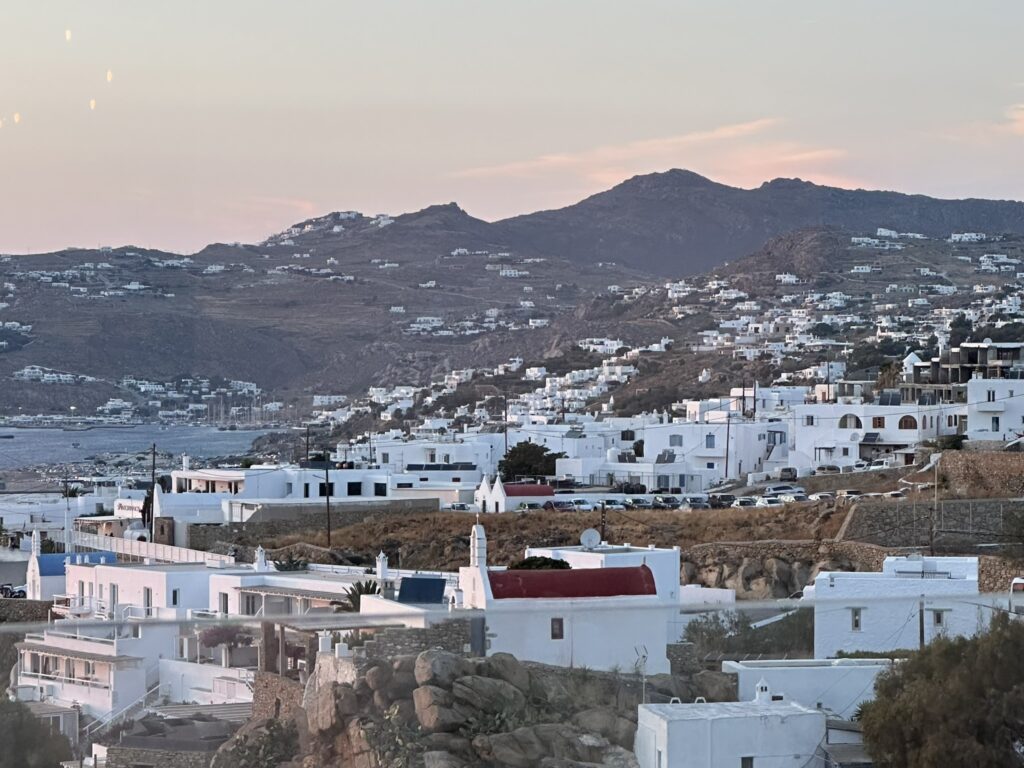
Most visitors stay in Mykonos Town for the maze-of-lanes nightlife and the iconic sunset or in Ornos / Platys Gialos if they prefer beach-village energy with easy access to town via bus or taxi. The island is small enough that you can visit every major beach and town in three to four days, but Mykonos’ rhythm rewards a fifth or sixth day to take a day trip to Delos, lounge on a beach club daybed, and have one for a sunset catamaran.
How Much Does It Cost to Visit Mykonos?
Mykonos is expensive. It is firmly in the top tier of European destinations per day, and during peak season, the beach-club-and-fine-dining lifestyle offered by the island markets can easily cost a couple more than €1,000 per day before they consider the hotel bill.
Plan on roughly €180–€300 per person per day for a mid-range trip. If you want a beach-club daybed at Nammos or Scorpios paired with a Little Venice dinner, that line item alone can push past €600 per person for the day.
Accommodations
In the shoulder season, a mid-range, three-star hotel in Mykonos Town or Ornos costs €180–€300 per night; in the summer, it costs €300–€600+. In the shoulder season, boutique design hotels in the Belvedere/Cavo Tagoo tier start at about €500 per night, and in August, they surpass €1,500 per night. Platys Gialos and Ornos offer good three-star options for €130–€250 per night during shoulder season, which is still pricey by European standards but a big step down from town if you’d rather have a beach-village base.
Book your hotel 8–10 months in advance for peak-season dates. Mykonos has a small inventory of marquee rooms; they sell out by January, and the late bookers always pay the worst rates.
For comparing inventory across the island, Booking.com is the easiest place to start, but always check the property’s own website too since many of the boutique Mykonos hotels offer direct-booking rates that beat the platforms.
Food and Meals
It costs €15 to €25 per person for a casual taverna lunch that includes a gyro and a Greek salad. A mid-range restaurant’s dinner with wine costs between €45 and €80 per person. For €100 to €200 per person, a Little Venice waterfront or fine-dining room with the reservation-three-weeks-out energy is worthwhile once on the trip if the schedule permits it.
Coffee from a café costs €3.50–€5, a beer costs €6–€10 depending on the view, a bottle of local Greek wine at a taverna costs €25–€45, and a beachside cocktail at a respectable beach club costs €18–€28. At the main locations (Nammos, Scorpios, and Principote), beach club daybed rates with minimum spending requirements start at €100–€200 per day and rise to €500+ for a front-row daybed in August.
Activities and Tours
The main attraction is a day trip to the Delos archaeological site, which costs €20 for site admission plus €25 for a round-trip ferry from the Old Port. A self-guided visit costs roughly €45, while a guided tour with transportation costs €70–€120 per person. For four to five hours, including dinner and drinks, a sunset catamaran cruise costs between €120 and €200 per person. Compared to Santorini, Mykonos has a smaller wine tasting scene, but it is still possible for €20 to €35 per winery. Most south coast beaches charge between €10 and €25 for two sunbeds and an umbrella on a typical beach day without a beach club.
Transportation
A KTEL public bus costs €1.80-3.00 depending on the route. Pre-booked airport transfers to Mykonos Town cost €25-30, to Platys Gialos or Ornos €25-35 and to Elia or Kalafatis €35-45. In shoulder season a rental car costs €40-€90 per day and in July and August, €70-€150 per day. Most fixed routes don’t use a metered taxi, so you’ll need to agree on a price before you get in. See the Getting Around section for the brutal taxi-shortage reality.
Money, Cards, and How Not to Lose 5% at the Airport ATM
The Euro (€) is used in Greece, and most stores, hotels, restaurants, and beach clubs accept credit cards. The KTEL public buses only accept cash, beach loungers prefer cash, village tavernas off the main streets prefer cash, and tips vanish if you leave them on a card, so you will still need to carry between €30 and €50 in cash each day.
ATM Strategy and the Dynamic Currency Conversion Trap
Avoid using the currency exchange counters at the airport. Robberies are the rates. When you withdraw euros from an ATM operated by a Greek bank, such as Piraeus Bank, Eurobank, Alpha Bank, or National Bank of Greece, you will receive an amount that is nearly equal to the mid-market rate.
When the card reader or ATM asks, “convert to USD?” Never hesitate to say no. Dynamic currency conversion, which adds a 3–5% markup that goes to the terminal operator rather than your bank, is what happens when you accept that prompt. Regardless of your home currency, always make payments in euros.
Pro tip: Never use the standalone yellow “EuroNet” ATMs you will see in every tourist square. They are private (not bank-affiliated), they default the “convert to USD” prompt to YES, and the fees are nasty. Walk past them and find a real bank ATM.
The Wise Multi-Currency Card
A Wise multi-currency card locks in the actual mid-market exchange rate and lets you withdraw euros with zero foreign transaction fees. If you travel internationally even once a year, it pays for itself on the first ATM withdrawal. Load it from your U.S. bank account through the Wise app, then tap or insert at any Greek terminal exactly like you would at home.
Tipping Etiquette
In Greece, leaving a tip is appreciated but not necessary. Rounding taxi fares to the closest euro, leaving a few euros for the hotel housekeeper, and paying 10% in restaurants for excellent service are the norm. Tip in cash at all times. Greek servers hardly ever see card tips because tips on cards usually go to the house, not the employees, and the receipts are reconciled at the end of the evening.
Getting to Mykonos
You can travel by air or ferry from the mainland to Mykonos. Both have their place; the best option for you will depend on your starting point, your financial situation, and how much you like taking long boat rides.
Flying In
JMK, or Mykonos-Manto Mavrogenous Airport, is the commercial airport for Mykonos. The distance to the south of Mykonos Town is roughly 4 kilometers. JMK offers direct seasonal flights from many European cities, including London, Paris, Amsterdam, Vienna, Milan, Frankfurt, and Zurich, from May to October. You will typically connect through Athens for the remainder of the year.
The flight from Athens to Mykonos takes only 40 to 45 minutes, and after accounting for the ferry transfer at Piraeus, the total travel time on the plane is typically equal to that of the ferry, though it may be less expensive if you make reservations in advance.
Ferries from Athens
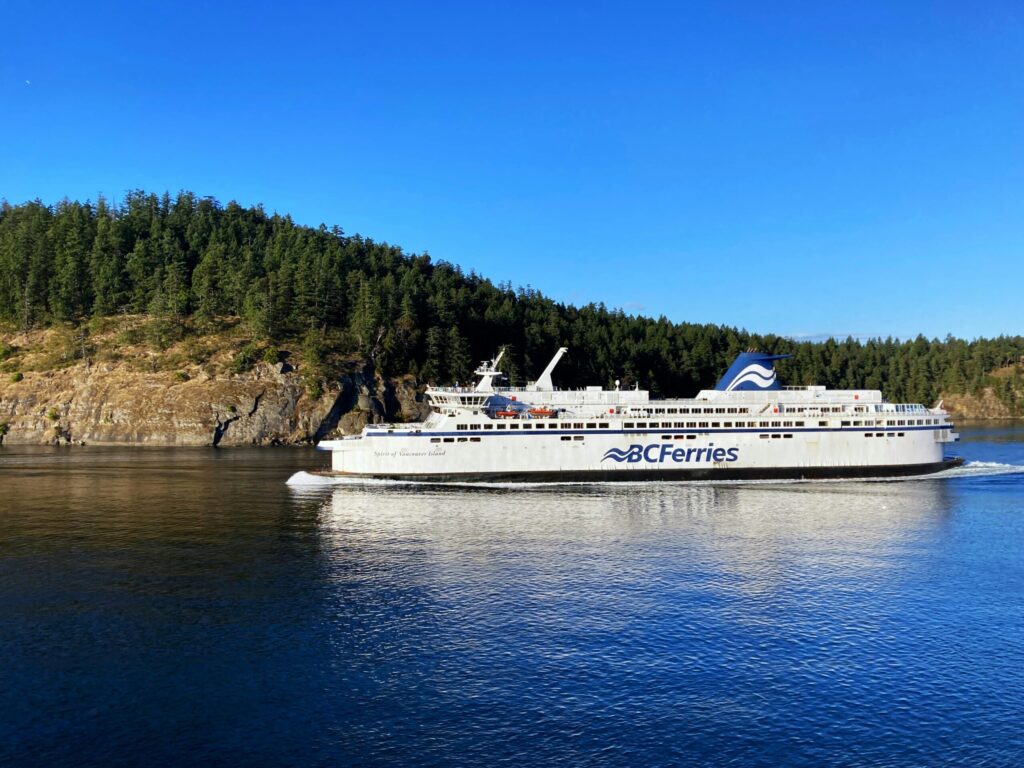
There are two ports of departure close to Athens and two ferry classes if you would prefer to travel by sea. The Aegean is truly breathtaking from a ferry deck:
- Rafina port, which is smaller and closer to Athens airport and saves roughly an hour of mainland transit if your flight lands at ATH, and Piraeus port, the large traditional port near central Athens.
- High-speed ferries (SeaJets, Hellenic Seaways) are more costly, take roughly 2.5–4 hours from Piraeus or Rafina, and become erratic during severe Meltemi weather.
- Conventional ferries (Blue Star Ferries, Golden Star Ferries): 4–6 hours, much more stable, and less expensive.
Book through Ferryhopper or directly with the operators. Peak-season tickets sell out 2–3 weeks in advance, so do not show up at Piraeus the day of and expect to wing it.
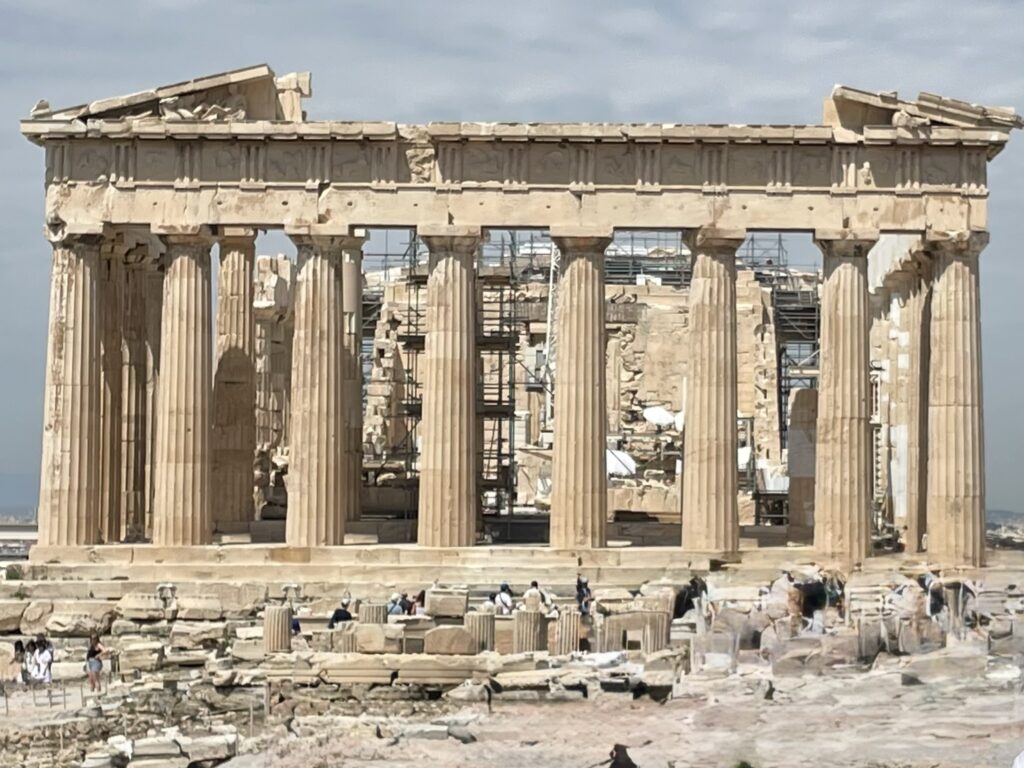
Geaux to Athens, Greece
Your full guide on Where to Eat, Stay, and Play in Athens, Greece
Inter-Island Ferries (for Cyclades Hopping)
For a two-stop Cycladic vacation, Mykonos goes well with Santorini or Paros. The high-speed ferry travels 2.5–3 hours between Mykonos and Santorini, 45–1 hour between Mykonos and Paros, and 30–45 minutes between Mykonos and Naxos. Make reservations via Ferryhopper or directly with SeaJets, and pay close attention to the schedule. Meltemi winds in July and August can completely cancel sailings, and some routes only operate a few times a week during shoulder season.
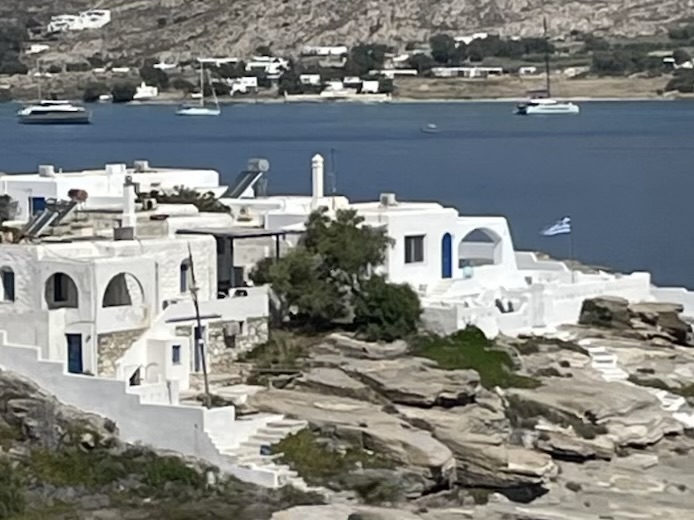
Geaux to Paros, Greece
The best things to Do and places to eat and stay in Paros, Greece
The Two Ports Problem — Tourlos vs. Chora, and How to Land at the Right One
Mykonos has TWO ports. They are NOT interchangeable. Showing up at the wrong one will ruin your day.
Here’s what each port does, who docks where, and how to steer clear of the trip’s most costly geography lesson. Santorini’s four-port mess and Mykonos’ two-port issue are identical traps, with fewer moving parts.
New Port at Tourlos (also called the Mykonos Cruise Port, or just “Mykonos Port”)
The larger cruise ships that do not tender dock here, as do all passenger and vehicle ferries from Athens, Crete, and the other Cyclades islands. Tourlos is your port if your ticket states “Mykonos” and you are traveling from any location on the ferry network, including Piraeus, Rafina, Heraklion, Santorini, Naxos, Paros, or Ios. Completely stop.
Mykonos Town is roughly two kilometers north of the New Port. It is not walkable with luggage because there is no pavement on the connecting road, the traffic is terrible, and you have to drag a suitcase along a shoulder while cars speed by. Your three choices are:
- If you reserve a transfer in advance with Welcome Pickups, your driver will meet you at the dock with a sign, the cost is set, and you can avoid the commotion at the port exit and the (actually short) taxi line.
- KTEL public bus — €2.30, cash, paid to the conductor as you board. Reliable but packed in peak season and dependent on the ferry actually arriving on schedule.
- Sea Bus — a small ferry shuttle that connects the New Port directly to the Old Port in Mykonos Town (€2 each way, summer only). Drops you in Chora itself rather than at a bus stop.
- Taxi at the dock — agree on a fare before you get in. Expect €15–€25 to Mykonos Town, but waits of 30–60 minutes are common when multiple ferries arrive together.
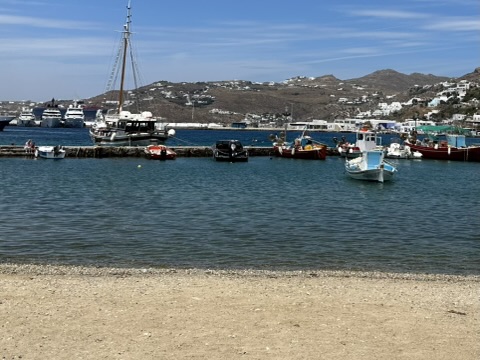
Old Port in Mykonos Town (also called Chora Port or Skala)
This port sits right inside Mykonos Town, at the foot of the village’s pedestrian-only lanes. It is used exclusively for cruise ship tenders (when ships anchor in the bay and shuttle passengers in by small boat), the Delos archaeological day-trip ferries, and small private craft. If you booked a passenger ferry from Athens or another island, you are not coming here.
The main benefit of the Old Port is that there is no need for a transfer because you are already in the city. The main drawback is that it cannot manage the volume that the New Port can, which is precisely why Mykonos constructed the second port at Tourlos in the first place.
The Two Mistakes Travelers Make
The two recurring errors:
- Showing up at the Old Port for your Athens ferry. Your phone said “Mykonos Port” and you walked five minutes from your hotel in Chora. Your ferry is at Tourlos, 2 kilometers north on a road with no pavement, and it leaves in 25 minutes. Expensive mistake.
- Showing up at the New Port for your Delos day trip. The Delos boats leave from the Old Port in Chora, not Tourlos. Different boats, different ticket counters, and different docks entirely.
Before you leave, always find out which port your boat is actually using by contacting your carrier or the port authority. Every day a boat is involved; treat this as the most crucial pre-trip text message you send.
Getting Around the Island
Here is the brutal truth, on the record: only about 30–35 licensed taxis serve all of Mykonos. In peak season that means hour-long waits at the airport on a busy ferry day, no taxi at the New Port when your ferry lands at the same time as two others, and pickup queues at the headline beach clubs that stretch deep into the evening as everyone tries to leave at once.
Uber Exists, Sort Of
Uber operates on Mykonos as a taxi-booking app, not a peer-to-peer rideshare. You are hailing one of those 30–35 licensed taxis through the Uber interface, not a peer driver. Availability is exactly as bad as flagging one in the street, and the price savings versus a regular taxi are minimal.
Pre-Booked Transfers
Pre-booking an airport or port transfer is the single highest-leverage decision for a smooth Mykonos arrival. Welcome Pickups is the easiest option since your driver meets you with a sign, the price is fixed, and you skip the taxi queue entirely.
Expected fares from JMK Airport: ~€17–€25 to Mykonos Town, ~€25–€35 to Platys Gialos or Ornos, ~€35–€45 to Elia or Kalafatis on the east side.
KTEL Public Buses
For €1.80 to €3.00 per ride, you can take the KTEL bus network from Mykonos Town to the airport, both ports, Ornos, Platys Gialos, Paradise, Super Paradise, Elia, Kalafatis, and Ano Mera. You must pay the conductor with cash when you board. The two primary bus stations are Old Port station, which serves Tourlos New Port, Ano Mera, Elia, and Kalafatis, and Fabrika station, which serves Ornos, Platys Gialos, Paradise, Paraga, and the airport. The online schedules aren’t always up to date, so take a picture of the schedule as soon as you see it. The stops’ schedules vary seasonally.
The Sea Bus (Often-Overlooked)
A small ferry called the Sea Bus runs between the Old Port in Mykonos Town and the New Port at Tourlos for about €2 each way during the summer. It is faster than the bus when traffic on the connector road is heavy, and it is the easiest way to get from your hotel in Chora to your departing ferry without paying for a taxi. Most travelers miss it because nobody mentions it in the standard guides.
Renting a Car
If you want the freedom to visit several beaches, Ano Mera village, and the inland Panagia Tourliani monastery at your own pace, renting a car is the best option. Instead of picking you up in Mykonos Town, pick you up at the airport, which has better parking and wider roads. Since most of the important lanes in Mykonos Town are pedestrian-only, you will still need to park on the edges.
Bring an International Driving Permit (IDP). Most rental agencies on Mykonos will not ask for one, but Greek police can, and your insurance may be void without it.
Skip the ATV or Quad Rental
Unless you are an experienced rider, avoid the ATV. Every season, tourists end up in the emergency room due to hairpin turns, chaotic local drivers, unfamiliar machines, wind, and the inevitable late-night beach-club return trip. The Mykonos hospital has a separate ATV injury queue. Be smarter than the bachelorette party.
Cruise Ship Traffic — The €20 Surcharge and the 8,000-a-Day Wave
Here is the planning move most travelers miss: the difference between a magical Mykonos Town day and a miserable one often comes down to which day’s cruise schedule you accidentally walked into. Mykonos handled 768 cruise ship calls and 1.29 million cruise passengers in 2024, with the volume concentrated heavily on weekdays between June and September. On peak summer days, three to five cruise ships can be in port at the same time, each disembarking 2,000–5,000+ passengers via tender to the Old Port. They funnel directly into Mykonos Town’s narrow whitewashed lanes between roughly 10 AM and 5 PM.
The math is brutal: a “heavy” cruise day can bring 8,000-12,000 day-trippers to Mykonos Town for a six-hour period. The lanes around Little Venice and the windmills were designed to confuse pirates, not for that volume of traffic, and the photogenic alleys become shoulder-to-shoulder shuffles.
The €20 Cruise Tax (and What It Actually Costs)
Greece introduced a per-passenger cruise disembarkation fee in July 2025 that continues through 2026. At Mykonos and Santorini specifically:
- €20 per person during peak season (June 1 to September 30).
- €12 per person during shoulder season (April, May, October).
- €4 per person during low season (November to March).
The fee is collected by your cruise line through your onboard account before you disembark — there is no way to opt out, and it is charged regardless of age. The money is earmarked for port infrastructure and waste-management upgrades on the two islands hit hardest by overtourism.
How to Check the Cruise Schedule Before You Plan Your Day
Two free websites publish the daily cruise calendar for Mykonos in advance:
- CruiseTimetables.com — search “Mykonos” and pick your date range; lists each ship, arrival and departure times, and passenger capacity.
- CruiseMapper.com — live ship tracking plus advance schedules.
Cross-reference your travel dates against the calendar before you finalize your day-by-day itinerary. If you see four-plus ships in port on the day you planned to do Mykonos Town, swap that day with a lower-traffic day on your trip and pivot to the southern beaches or Ano Mera instead.
The Time-of-Day Workaround
Even on a heavy cruise day, you can have Mykonos Town mostly to yourself if you bracket the crowd:
- Before 9:30 AM — the cruise tenders start running around 8:30 AM but it takes time for passengers to clear the small Old Port pier and disperse into the lanes. The window between 7:30 AM and 9:30 AM is the magic hour: golden morning light, open photo angles at the windmills, and the bakeries opening for the day.
- After 6:30 PM—most cruise ships re-board by 5:00–6:00 PM so they can sail before sunset. By 6:30 PM the day-tripper wave has cleared, and the town shifts into evening mode. The sunset at Little Venice is for the people staying overnight on the island, not the day-trippers.
Day-of-Week Patterns
Cruise traffic is not evenly distributed across the week. The general pattern in peak season:
- Monday through Friday — the heaviest days, with most Mediterranean cruise itineraries scheduling Mykonos as a mid-week port call.
- Saturday and Sunday — typically lighter, sometimes dramatically so, because most cruises do their turnover days on weekends.
- Shoulder season (May, late September, October) — cruise volume drops by 40–60% from the July/August peak across every day of the week. Late September is the genuine sweet spot if you want Mykonos Town without the cruise crowds and still want the beach clubs open.
The takeaway: check CruiseTimetables.com when you book, choose your “Mykonos Town day” for the lightest cruise day in your window, and visit before 9:30 AM or after 6:30 PM. That single planning move will transform your Mykonos trip more than any other tip on this page.
Cruise-Free Alternatives on Heavy Days
If your travel dates are locked and you cannot dodge a heavy cruise day, point your itinerary inland and to the south coast. Day-trippers almost never venture beyond Mykonos Town itself, which means Ano Mera (the only other proper village, with the Panagia Tourliani monastery), the south coast beaches (Paradise, Super Paradise, Elia, Kalafatis), Platys Gialos, and Ornos all stay calm even on peak cruise days. Save Mykonos Town for the lighter days, and use the cruise-heavy days for beach clubs and the interior.
Connectivity, Wi-Fi, and Outlets
eSIM (the easy option)
4G and 5G coverage are strong across Mykonos. Grab an Airalo eSIM for Greece before you fly and you will be online the second your plane lands. No SIM card swap, no hunting for a kiosk at the airport, no roaming charges. The Greece eSIMs run about $5 for 1GB up to $20 for 10GB, and you install everything through the Airalo app before you leave home.
Hotel Wi-Fi
Hotel Wi-Fi is generally solid in Mykonos Town, Ornos, Platys Gialos, and Elia, but can be patchy in remote interior villas where coverage drops off between hills. If you need to work from your room, ask about the signal at booking and request a room near the router.
Outlets and Adapters
Greek outlets are Type C / F — two round pins, 230V / 50Hz. Pack a universal adapter. You do not need a voltage converter for modern phones, laptops, cameras, or chargers.
Safety and Health
The U.S. State Department lists Greece at Level 1 — Exercise Normal Precautions, the lowest advisory level. Violent crime against tourists is rare. The real risks on Mykonos are environmental, logistical, and a couple of well-documented beach-restaurant overcharging operations which are unique to Mykonos:
- Beach restaurant overcharging scams — see Section 9a below for the named operation and the rules that protect you.
- Pickpocketing in tight crowds — especially the Little Venice sunset crowd and the cruise-day funnel through Matogianni Street. Wear a cross-body bag, zipped, in front.
- Slippery whitewashed steps after dark in the lanes of Chora. Wear shoes with grip after sundown, not the cute sandals from your beach-club photoshoot.
- The Meltemi wind blows hard from the north in July and August, routinely cancels Delos ferry runs and catamaran cruises, and makes south-coast beaches choppy on bad days. Build a flex day into your beach plans.
- Summer wildfires are a real risk April through October across all of Greece. Follow Greek Civil Protection alerts on the GR-Alert app, and never toss a cigarette from a moving car.
- Scooter and ATV accidents are the leading cause of tourist medical evacuations from Mykonos. Take this seriously.
- Tap water is desalinated seawater which is fine for brushing teeth and showering but it tastes salty. Most locals drink bottled. Pick up large 1.5L bottles from a supermarket rather than paying tourist prices for the small ones, and bring a refillable bottle for refills.
- Sun exposure on the open beaches and treeless Cycladic terrain is brutal with almost no natural shade. SPF 50, a hat, and a refillable water bottle are not optional.
The Beach Restaurant Overcharging Scam (Yes, It’s Real)
There is one beachfront operation on Platys Gialos with hundreds of documented complaints about bills that come in 10–20× higher than expected. Recent traveler reports include €350 for a single fish, €520 for two cocktails, and €1,000 for three dishes. The pattern is consistent across all the reports: aggressive waiters intercept walkers on the beach, offer “free” sunbeds with a drink order, push lobster pasta or oysters without a printed menu, and present a wildly inflated bill at the end with extra “gifted” items added.
The named operation is DK Oyster on Platys Gialos Beach. Google “DK Oyster Mykonos” before you geaux and read the TripAdvisor reviews. Cyclades Regional Tourism Agency fined them roughly £25,000 after an audit, and they remain in business.
The rules that protect you anywhere on Mykonos Beach, not just at DK Oyster:
- Demand a printed menu with prices before you order anything. EU regulations require restaurants to advertise total cost before payment. If a waiter cannot or will not produce a menu, walk away.
- Never accept a “free” drink, “gift” oyster, or “complimentary” sunbed. Every documented scam at this address began with one of those offers and ended with the item on the bill.
- Confirm every price out loud in front of your party. “The lobster pasta is €29? Per portion, not per gram, correct?” Repeat the answer. If the bill arrives and contradicts it, you have witnesses.
- If the bill is wrong, ask the staff to call the tourist police. Tourist police take pricing disputes seriously, and the threat alone often resolves the situation. Do not pay an obviously fraudulent bill under physical pressure but rather pay the disputed amount on card so you can chargeback and report it to your hotel and the local police on the way home.
Travel Insurance
Travel insurance is essential for any Mykonos trip, as Meltemi-canceled ferries, scooter accidents, and the occasional wildfire-related itinerary scramble are all common occurrences. SafetyWing is the most user-friendly digital-nomadic coverage with subscription billing, while World Nomads is a more traditional one-trip travel-medical option with adventure-sport coverage.
Emergency Number
112 — it works from any phone in any language and dispatches police, fire, and ambulance throughout Greece and the EU. Save it before you fly.
Plumbing Reality Check
Never flush toilet paper. Mykonos’s pipes are too narrow, like everywhere else in Greece. There is a bin next to every toilet for a reason. Trust me on this one — your hotel will absolutely charge you for the plumber if you forget.
Language and Etiquette
English is widely spoken in every tourist-facing business on Mykonos — restaurants, hotels, tour operators, taxi drivers, beach clubs. But locals warm up fast if you try a few Greek phrases.
Basic Greek Phrases
- Yassas (yah-SAS) — Hello (formal/plural). Yassou for one person you know.
- Efharisto (ef-har-ee-STOH) — Thank you.
- Parakalo (pa-ra-ka-LO) — Please / you’re welcome.
- Kalimera (ka-li-MER-a) — Good morning.
- Kalispera (ka-li-SPER-a) — Good evening.
Meal Timing and Reservation Culture
Greek dinners are lengthy. Lunch is served from 2 to 3 PM, dinner doesn’t begin until 9 PM, and a reservation made at 6:30 PM is a clear indication that you are a visitor on a cruise ship; locals won’t be there.
Little Venice waterfront restaurants and marquee beach clubs (Scorpios, Nammos, Principote) take reservations 2-4 weeks in advance in peak season. Book when you confirm your flights.
Dress Codes
Most restaurants in Mykonos are casual chic, so beach cover-ups are fine for lunch, but the headline beach clubs and Little Venice dinner spots expect proper clothes (and the marquee venues will turn away flip-flops). Women should bring a scarf to cover their shoulders, and men should wear long pants to the Panagia Tourliani monastery in Ano Mera and other churches.
Best Time to Visit Mykonos
The honest breakdown:
Shoulder Season (Late May–June and Mid-September–Mid-October) — The Sweet Spot
Warm weather, swimmable water, walkable lanes, lighter cruise volume, and prices that have not quite hit peak. Daytime highs are usually between 75 and 82°F in May and June and between 77 and 85°F in September and October. The beach clubs are open with daybeds that can be reserved at the actual menu prices, and the Meltemi wind has not yet reached its peak in June and is winding down by late September. When asked which month they would choose if they could only go once, many locals would say June because it has full operations, a sea temperature of around 72°F, and fewer tourists than August.
July and August — Peak Summer
This is when the Mykonos party scene truly shines. Scorpios is packed, world-renowned DJs perform every night, and the energy is never-ending. When daily highs reach 86-94°F, the Meltemi wind blows hard from the north for days at a time, canceling ferries and catamaran sunset cruises on a regular basis; when cruise ships dump 8,000-12,000 day-trippers into Mykonos Town every day; and when hotel prices triple. If you must travel in July or August, refer to the cruise-traffic section above; strategic day-of-week and time-of-day planning makes a significant difference.
November through March — Off-Season
Much of the island shuts down. Beach clubs and restaurants close, ferry routes thin out, and many hotels close entirely. If you plan to visit in the winter, which can be both beautiful and inexpensive, make sure to check what is actually open before booking. Mykonos Town remains partially open, with local shops, a few hotels, and year-round tavernas that cater to residents.
Entry Requirements for U.S. Citizens (Updated for 2026)
For U.S. citizens, the entry rules changed significantly in 2026. Here is the current state of play as of mid-2026:
Visa and Passport Validity
No visa required for stays up to 90 days in any 180-day period across the Schengen Area. Your passport must be valid for at least 3 months beyond your planned departure date from the Schengen Area, with at least one blank page for entry and exit stamps.
EU Entry/Exit System (EES) — Live as of April 2026
The EU Entry/Exit System (EES) is fully operational as of April 10, 2026. Your first Schengen entry, which will most likely be in Athens if you are flying into Greece, will require biometrics: fingerprints and a facial photo. Create a generous buffer for your first-day connections, especially in the summer when lines are long. Once your biometrics are on file, subsequent EU entries within the next three years will be processed faster.
ETIAS — Coming in late 2026
ETIAS pre-authorization for U.S. travelers is expected to launch in Q4 2026. Once active, ETIAS costs €20, takes about 10 minutes online, and is valid for 3 years.
ETIAS scam warning: It is NOT live yet. Any website currently asking you to “apply for ETIAS” or charging you for ETIAS is a scam. Always cross-check the U.S. State Department’s Greece page before you fly.
The Little Venice Sunset and the Windmills — Logistics and Honest Expectations
Yes, the Mykonos sunset over Little Venice and the windmills is real. Yes, it is worth it. No, you cannot show up 15 minutes before and find a comfortable spot.
Best Viewing Spots
Three solid options, ranked by photo-vs.-vibe:
- The Kato Mili windmill ridge — the row of five whitewashed windmills on the hilltop above Little Venice. Best for the iconic wide-angle shot with the sea behind. Free, no reservation, but bring grippy shoes because the path can be slick.
- A Little Venice waterfront bar (Caprice, Galleraki, Scarpa) — drink in hand, table on the water’s edge, the windmills lit up across the small bay. The classic Mykonos sunset photo. Bars do not take reservations but they do hold tables for parties that arrive early and order.
- The 180° Sunset Bar at the south end of Chora — a rooftop with caldera-energy views over the town and sea. Reservation required in peak season.
Arrival Timing
- Shoulder season: 75 minutes before official sunset.
- July or August: 2 hours before official sunset, more if there are 3+ cruise ships in port that day.
- Always: walk to the windmills or Little Venice from your hotel as the lanes of Chora are pedestrian-only in spots and there is no parking anywhere near the sunset core.
The Delos Day Trip
While in Mykonos, don’t miss the half-day trip to Delos, a UNESCO World Heritage archaeological site on a small uninhabited island 30 minutes by boat from the Old Port. It was one of the most important religious and commercial centers in ancient Greece, and the site is truly spectacular: marble temples, mosaics, the famous Terrace of the Lions, and a clear view back to Mykonos.
Typically, the boats depart from Chora’s Old Port (not the New Port; see Section 5) at 9 AM, 10 AM, and 11:30 AM, and they return at 3 PM. You can book a guided tour through GetYourGuide or Viator for €70–€120 per person with transportation and an archaeologist guide, which is truly worth it given the site’s complexity, or you can go it alone for about €45 total (€25 round-trip ferry + €20 site entrance). In high season, make reservations one to two weeks in advance and pack a hat and water because Delos lacks trees and the sun is fierce.
The Sunset Catamaran Cruise
A sunset catamaran cruise, which lasts four to five hours along the south coast with stops for swimming and snorkeling, dinner and drinks included, and a final sunset over the Aegean, is the alternative anchor experience. They depart from a number of small marinas on the south coast (Ornos, Platys Gialos, or farther out depending on the operator), so before you leave, make sure to confirm your departure location with your tour operator. This is the same lesson as the two-ports issue. Visit the GetYourGuide and Viator links above to view the available options. During peak season, make reservations two to three weeks in advance because the well-rated boats sell out quickly.
What to Pack for Mykonos
A detailed explanation can be found in my Packing Lists section, which is linked below.
- Grippy walking shoes for the slick steps in Chora at night, especially after a Little Venice cocktail. Pretty sandals go in a separate bag for the photos.
- Swimsuit + cover-up + reef-safe sunscreen — Paradise, Super Paradise, Elia, and Platys Gialos are non-negotiable.
- Sun protection that is actually serious — wide-brim hat, SPF 50, polarized sunglasses, refillable water bottle. Mykonos has almost zero natural shade.
- A light layer for the Meltemi wind — even in July, evenings and ferry decks get unexpectedly cool when the north wind blows.
- Universal Type C/F adapter — the EU two-round-pin standard.
- A small zippered cross-body bag — pickpocket-resistant in Little Venice sunset crowds and the cruise-day funnel through Matogianni Street.
- One outfit for a marquee beach club or fine-dining dinner — Scorpios and Nammos enforce dress codes; flip-flops won’t get you in.
Browse the Packing List
Geaux Prepared. See my destination-specific packing guides
Mykonos Travel FAQs
Do I need cash in Mykonos, or are cards accepted everywhere?
Most restaurants, hotels, beach clubs, tour companies, and larger stores accept cards. Tipping, beach loungers, small village tavernas, and KTEL public buses (which only accept cash) will still require €30 to €50 per day. Instead of using airport currency counters, get euros from a bank ATM and make all of your payments in euros; never accept “convert to USD?” prompts.
Is Uber available in Mykonos?
Yes, but it works as a taxi-booking app, not a peer-to-peer rideshare. Only about 30–35 licensed taxis serve the entire island, so peak-season wait times can be brutal. For airport and port transfers, pre-booking with Welcome Pickups or a local transfer company is far more reliable than waiting for an Uber or street taxi.
Which Mykonos port should I go to for the ferry?
Every passenger and car ferry from Athens, Crete, and the other Cyclades uses the New Port at Tourlos — about 2 kilometers north of Mykonos Town. The Old Port in Mykonos Town (Chora) is used only for cruise ship tenders, the Delos archaeological day-trip ferries, and small craft. Always confirm with your carrier or the port authority (+30 22890 22218) before leaving your hotel.
Can I drink the tap water in Mykonos?
Tap water on Mykonos is desalinated seawater. It is safe for brushing teeth and showering but tastes salty, and most locals drink bottled. Pick up large 1.5L bottles from a supermarket rather than paying tourist prices for small bottles, and bring a refillable bottle for refills.
Do U.S. citizens need a visa for Mykonos?
No. As of mid-2026, U.S. passport holders can enter Greece visa-free for up to 90 days within any 180-day period. Your passport must be valid for at least 3 months beyond your planned departure. The EU’s Entry/Exit System (EES) is fully active as of April 2026 and collects fingerprints and a facial photo at your first Schengen entry. ETIAS pre-authorization launches in Q4 2026 and will cost €20.
What is the best month to visit Mykonos?
The best months are late May through June and mid-September through mid-October, with warm weather, swimmable water, busy beach clubs, and manageable crowds. In addition to the famous nightlife scene, July and August bring triple-priced hotels, intense heat, the Meltemi wind, and crowded beaches. To choose days with less cruise traffic, compare your dates with CruiseTimetables.com. A large portion of the island is completely closed from November to March.
How do I get from Mykonos Airport to my hotel?
Pre-booking a transfer with Welcome Pickups is the easiest option — your driver meets you with a sign and the price is fixed (about €17–€25 to Mykonos Town, €25–€35 to Platys Gialos or Ornos, and €35–€45 to Elia or Kalafatis). The KTEL public bus to Mykonos Town is €1.80–€3.00 cash. Taxis are available but limited (~30–35 for the whole island) — agree on the price BEFORE you get in, and expect 30–60 minute waits in peak season.
How much is the Mykonos cruise tax in 2026?
€20 per person during peak season (June 1 to September 30), €12 per person during shoulder season (April, May, October), and €4 per person during low season (November to March). The fee is collected by your cruise line through your onboard account before disembarkation — there is no way to opt out, and it applies regardless of age. Revenue funds Mykonos port infrastructure and waste-management upgrades.
Is Mykonos safe for tourists?
Yes. The U.S. State Department rates Greece at Level 1 — Exercise Normal Precautions, the lowest advisory level. Violent crime against tourists is rare. The real risks are sun exposure, the Meltemi wind for boat days, slippery whitewashed steps after dark, scooter and ATV accidents, summer wildfires, well-documented beach-restaurant overcharging scams (notably DK Oyster on Platys Gialos), and petty pickpocketing in crowded sunset crowds and cruise-day funnels. Demand a printed menu before ordering at any beach restaurant, and never accept “free” anything.
Should I rent a car on Mykonos?
It depends on where you are staying. If you are in Mykonos Town and only doing day trips to beach clubs or the marquee beaches, you can survive on buses, taxis, and beach taxi-boats. If you want flexibility to hit multiple beaches, the Panagia Tourliani monastery in Ano Mera, and the eastern beaches like Kalafatis on your own schedule, a rental car gets you there faster than buses and cheaper than taxis. Pick up at the airport (wider roads, easier parking) rather than in Chora, and bring an International Driving Permit.
You’re Ready to Geaux
Mykonos delivers on the postcard. The whitewashed cubist village really is one of the most beautiful places you will walk through in your life, the windmills at golden hour really do look like they were dropped in by a film director, and the south-coast beach clubs really are a vibe you cannot replicate anywhere else. But Mykonos rewards travelers who do their homework — who land at the right port, build buffer into their first-day connections, check the cruise schedule before they pick their Chora day, book the Little Venice dinner three weeks ahead, demand a printed menu at every beach restaurant, and know to pre-book a transfer because the 30 taxis serving the entire island will not save them.
Save this post, share it with whoever you are traveling with, and bookmark the full Where to Geaux Eat, Stay, and Play in Mykonos guide for everything you will do once you are on the island.
Ready to plan the rest of the trip?
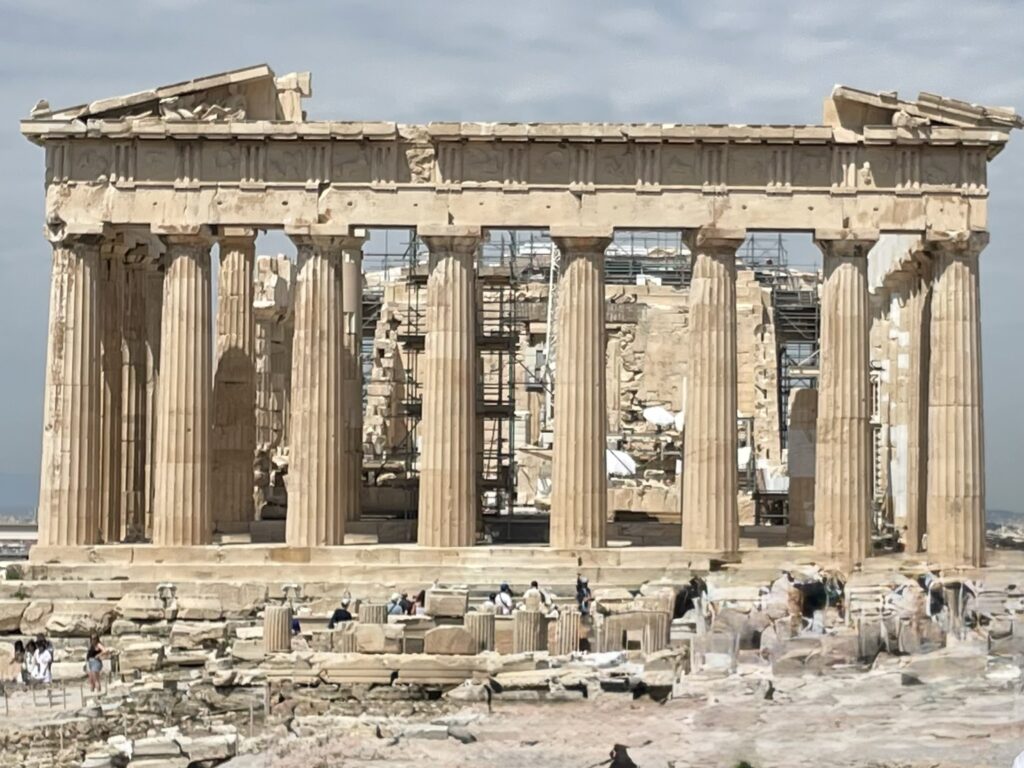
Geaux to Athens, Greece
Greece’s ancient capital and the mainland gateway to the Cyclades.
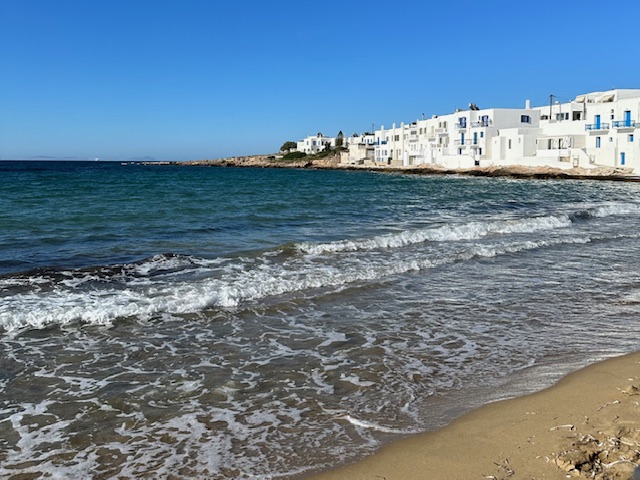
Geaux to Paros, Greece
The dreamy Cycladic island that pairs perfectly with Mykonos.

Geaux to Mykonos, Greece
Browse the best places to stay, things to eat, places to eat & drink in Mykonos.
This post may contain affiliate links. When you make a purchase using one of these links, I earn a small commission at no extra cost to you. Thank you for supporting Breaux on the Geaux!